DFF’s AI Hub: One Year of Centering Human Rights and the Environment in the Legal Response to AI and Digital Infrastructure
DFF’s AI Hub: One Year of Centering Human Rights and the Environment in the Legal Response to AI and Digital Infrastructure

By Cesar Manso-Sayao and Ange Royall-Kahin, 30th September 2026
Since we launched the AI and Digital Infrastructure Hub (AI Hub) in June 2025, AI tools have increasingly become household names and a polarising issue on many fronts. Every industry and sector is actively planning how to implement them in their work, and the AI-uptick in day-to-day life has been exponential: friends are speaking about ChatGPT over coffee; children are using Claude to prepare for school exams; employees are concerned about how AI-rollouts might impact their job security.
As a result, the conversation around AI’s impact has grown and highlights the need for accountability. The EU’s InvestAI program is mobilising €20 billion to drive private investment in gigafactories alone; meanwhile, data centers are being built in marginalised communities and their backup diesel generators are generating harmful fine particulate matter, sulfur dioxide, and nitrogen oxides that degrade environmental and human health. Further up in the supply chain, mining the critical minerals required for this infrastructure is also leaving local communities with polluted water and poor health, such as “high rates of miscarriages, congenital malformations and infant mortality” in the Democratic Republic of Congo, which is just one amongst many examples. And in the end, the outcomes of these infrastructure projects are technologies that, according to Amnesty International, “rely on data collection and model training practices that abuse privacy rights, enable discrimination, and threaten freedom of expression and thought.”
Hub participant Coline of the Collaborative Research Center for Resilience Collaborative Research Center for Resilience) is seeing the harms amplify each other: “The rush to secure AI infrastructure and mineral supply chains has intensified alongside the ascendancy of deportation and border infrastructure, including forced third country transfer arrangements. We are seeing tech deployed at even faster rates to fast-track removals to the same sites of manufactured precarity and extractivism, producing compound rights violations. The Hub has been useful for situating our efforts within a broader ecosystem of organisations confronting these converging harms.”
The AI Hub was started to support legal strategies to ensure the development and deployment of AI and related infrastructure centre human rights and environmental justice, and to provide a space where civil society organisations, activists and researchers can collaborate and share experiences across jurisdiction and thematic areas related to AI and digital infrastructure.
It has been very gratifying to see that many members of the digital rights community have found in the Hub a space to further develop the legal strategies and litigation projects they had already begun researching and planning, while also exploring and consolidating new collaborations and partnerships. As Hub participant Christiaan of Leitmotiv puts it, “ It is fascinating to see the acceleration in the past year of strategic litigation on AI & digital infrastructure across Europe. The AI Hub discussions help to see what others are working on and to exchange helpful tips and ideas on litigation in this complex and fast-developing area.”
On the other hand, other participants are only just starting to explore the potential of strategic litigation as a tool to advance their mission, such as Hairat of Generation Lumière, who reflected that “past year was an opportunity for us to discover what strategic litigation is, how it is done, and to learn from others in the Hub who have already done it…We are also starting to research our case and connect with people who can provide us with more information.”
Now that we have completed the Hub’s first year, we are taking a moment to reflect on what has happened so far and where we go from here.
What's being worked on?
Through the Hub, participants are developing cases that challenge AI accountability gaps across three interconnected issue areas:
- Platform Power and Online Rights: Cases on algorithmic amplification of hateful content, inadequate content moderation, AI-facilitated gender-based violence, labour protections for AI trainers, and protection of artistic expression from algorithmic censorship, amongst others.
- Environmental Costs of Technology Infrastructure: Cases on community resistance to data centres, greenwashing challenges against investment funds, corporate accountability for supply chain harms, and responsibility for infrastructure linked to repression of environmental activists and land defenders, amongst others.
- Surveillance and Conflict Applications: Cases on AI militarisation, corporate complicity in human rights abuses through cloud and surveillance technologies, and national security exemptions shielding surveillance from scrutiny, amongst others.
How far have we come in the litigation life cycle?
Over the last 12 months, the Hub has welcomed participants to discuss objectives for the Hub, and we completed the “Preparation Phase” of its programme. During this phase, participants reflected on the broader societal goals they wish to achieve through their work and adopting a community-centred approach to the development of their cases. We also covered topics such as jurisdiction, choice of legal framework, admissibility, standing, evidence gathering, choosing the right team, litigation timelines and budgets.
As our Co-director Nikita mentioned at the Hub’s 6-month mark, it was clear early on that “despite already covering topics such as broader aspirations for court cases, jurisdiction, admissibility and legal standing, with input from the participants, we have realised that we need to dedicate more time to the preparation phase...This just shows how important having a good foundation is.”
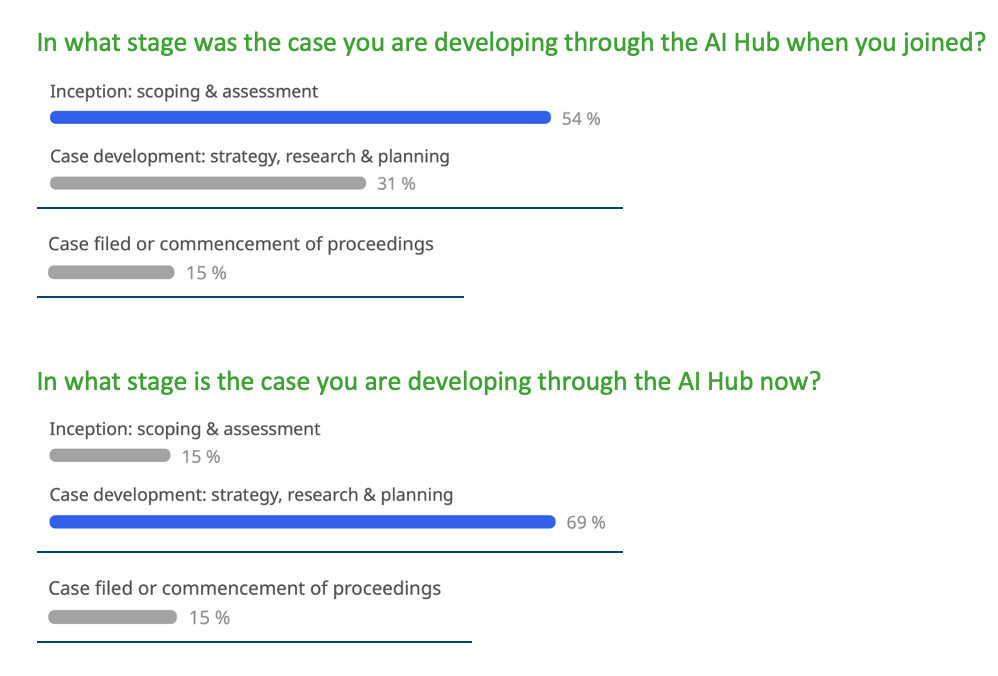
In hindsight, this makes a lot of sense taking into account that, according to our annual survey, 85% of participants’ cases are still in the inception or development stage, with only 15% of cases filed and in active proceedings. However, we have been able to track significant progress throughout the year, as the ratio between those at the inception and the development stage has shifted substantially between the time they joined the Hub and the one-year mark.
What we have accomplished and learned so far
One thing we consistently hear from participants is that in-person events organised by DFF are some of the Hub’s biggest value-add. This was clearly reflected in the feedback we received from participants at the Hub’s launch workshop Marseille in June 2025 and the Strategic Litigation Retreat we hosted in October 2025.
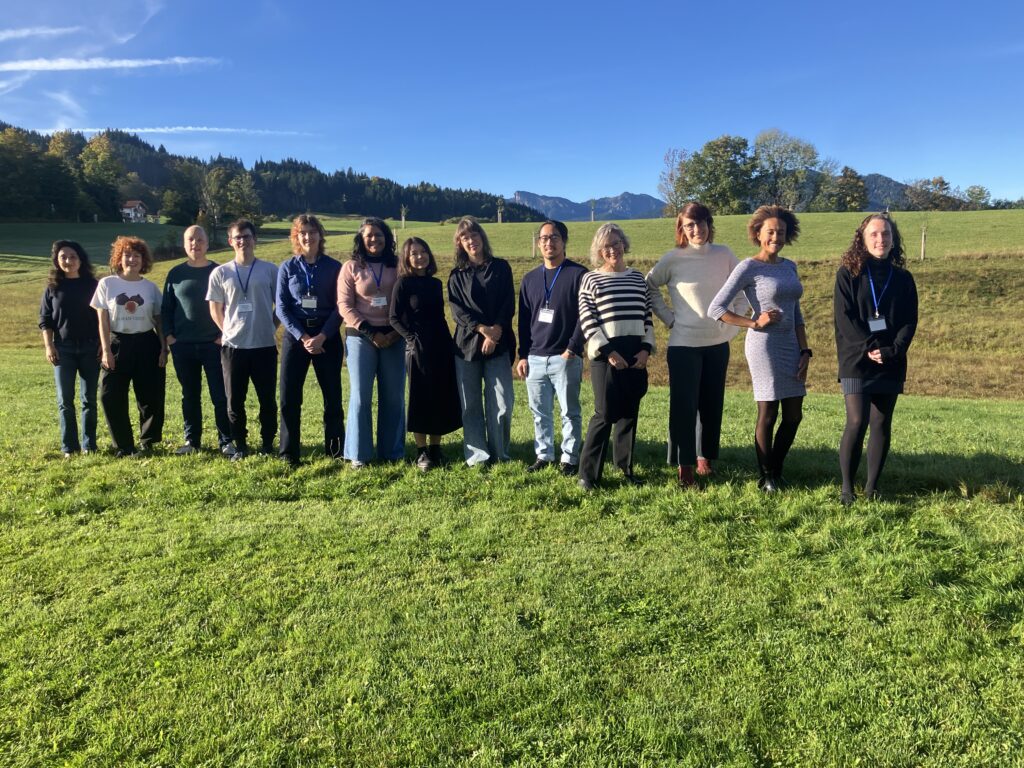
Amongst the Hub’s main goals, fostering partnerships and collaborations is one of the most important ones. The feedback we have received suggests that some are already beginning to flourish through our in-person events and monthly calls, with promising signs that the connections established through the Hub may lead to even more collaboration over time.
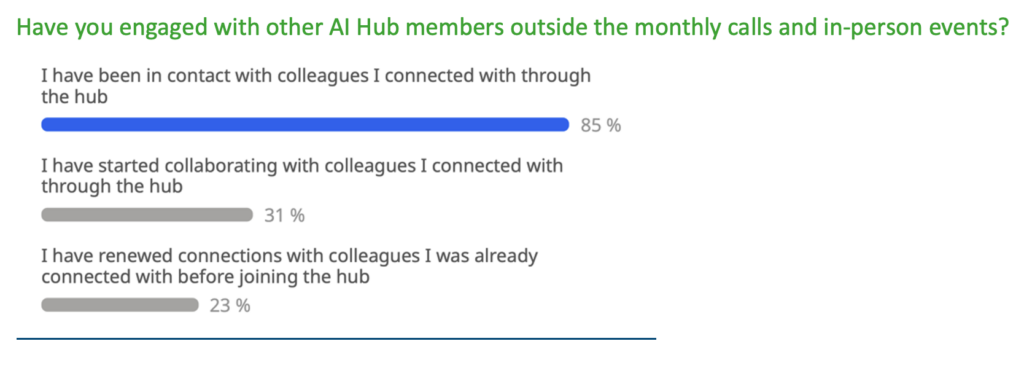
Some of the main challenges over the past year have related to participants’ capacity to attend regular meetings due to time zones, workloads, organisational capacity, and the demands faced by those doing volunteer-based work alongside jobs, studies, and care responsibilities. In response, we have implemented participants’ suggestions and developed new ways to facilitate knowledge-sharing and coordination asynchronously between monthly calls.
We have also sought to accommodate different levels and areas of expertise, stages of case development, and jurisdictions and legal frameworks. While these differences can create complexity, we have remained flexible and responsive, adapting session formats and breakout groups to the topics, cases, and participants involved. At the same time, these differences offer valuable opportunities for mutual learning and broader connections among participants.
What’s next?
In our last monthly call in September, we concluded the “Preparation Phase”, and the Hub will now transition into the “Litigation Phase”, where we will cover topics such as drafting pleadings, translating complex technical issues into accessible legal arguments, strategies and methods for presenting evidence and expert witness testimony, leveraging interim measures, requesting remedies and damages, third-party interventions and amicus curiae, litigation in regional and international courts, as well as coordinating litigation with campaigning, policy, and communications strategies.
We are also very excited to be hosting the first edition of our annual InterHub Gathering on 7-8 October in the Netherlands. In collaboration with the University of Amsterdam’s Institute for Information Law (IViR). This event will bring together participants from the AI Hub and our Digital Democracy Hub to exchange knowledge and insights aimed at facilitating cross-thematic learning around the legal strategies being developed in each hub, and to strengthen coordination, alignment, and mutual reinforcement of strategic litigation efforts within the digital rights community.
We’ll be sharing glimpses and insights around what transpired at the event very soon, as well as new developments in our Community Hubs (including our recently launched LGBTI Rights and Children’s Rights Online Hubs) so watch this space!
To learn more about the Hub and it’s first year, you can also view our AI Hub: Year One Interim Report on our website.