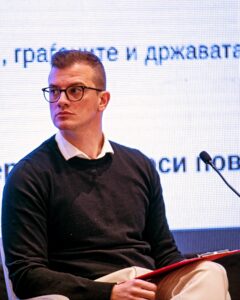
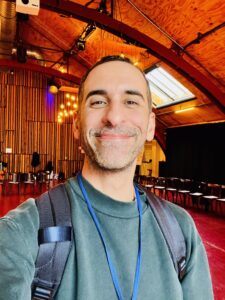
As part of a series of changes to transform our grantmaking, since December 2024 we are piloting a participatory decision making process where grant decisions are made by a group of peers from the wider community, rather than by DFF.
In late 2024, we ran an open call for applications to be part of the first Peer Group, with around 40 applications received. Ten people were part of the initial version of the Peer Group, which has since been expanded. Current and former members of the group are listed below. Check out this blog for reflections on how the pilot has gone so far.
All members of the Peer Group sign a Terms of Reference, which includes a confidentiality policy and conflict of interest policy. All Peer Group members are compensated for their time.
Based on lessons from the pilot it is our intention to gradually role out participatory practices across all our grantmaking processes. The Peer Group itself will evolve over time, with some members leaving and new people joining on a regular basis.
Aintzane Márquez Tejón
Strategic Litigation Researcher at SOMO (The Centre for Research on Multinational Corporations). Based in Spain.
Aldessa Georgiana Lincan
A Roma intersectional decolonial feminist and the co-founder and director of the Romnja Feminist Library. Based in Romania.
Alex Haché
Co-Program Manager for Fembloc a feminist helpline providing support to survivors of Technology-Facilitated Gender-Based Violence (TFGBV), and Community Building Manager at the Digital Defenders Partnership. Based in Spain and France.
Alyna Smith
Advocate on tech, migration and justice. Researcher at Equinox Initiative for Racial Justice for the Tech Infrastructure Coalition, a partnership with The Institute for Technology in the Public Interest. Based in Belgium.
Amber Macintyre
A consultant on digital campaigns and political influence, and formerly Project Lead of the Influence Industry Project at Tactical Tech. Based in Germany and the UK.
Amina Mahović
Digital Rights Programme Manager at Balkan Investigative Reporting Network (BIRN HUB). Based in Bosnia and Herzegovina.
Anca Baltac
Lawyer specialising in strategic litigation on LGBTI+ rights, discrimination and hate crimes at ACCEPT Association. Based in Romania.
Atanas Avramov
Policy and Advocacy Officer at Association Stronger Together, an association for support of people living with HIV. Based in North Macedonia.
Danilo Ćurčić
Programme Coordinator at the A 11 - Initiative for Economic and Social Rights. Based in Serbia.
Di Luong
A public interest technologist, currently working for Global Voices and previously for the Open Technology Fund. Based in Germany.
Dorota Glowacka
Advocacy & Litigation Expert at the Panoptykon Foundation, specialising in precedent court cases and advocacy in the area of big tech regulation. Based in Poland.
Emma Irving
Co-founder of the Fénix Foundation, an NGO with a mission to leverage technology for international justice, peace, and accountability. International legal consultant specialising in the intersection of justice and technology. Based in Spain.
Fieke Jansen
A postdoc researcher and co-principal investigator with the Critical Infrastructure Lab at the University of Amsterdam, and Co-Lead at the Green Screen Coalition. Based in the Netherlands.
Gema Fernández Rodríguez de Liévana
A feminist activist working as a Fundamental Rights Lawyer at ClientEarth. Based in Spain.
Itxaso Domínguez de Olazábal
Policy Advisor at European Digital Rights (EDRi). Based in Belgium.
Jędrzej Niklas
Scholar and lecturer at the University of Cambridge working on technology governance and human rights. Previously active in Poland’s digital rights community, supporting civil society work on data protection and emerging technologies. Based in the United Kingdom and Poland.
Kiran Chaudhuri
Senior Legal Officer at the European Legal Support Center, an organisation defending and empowering the Palestine solidarity movement across Europe through legal means. Based in Italy.
Olivia Njoroge
Legal Adviser, Diakonia International Humanitarian Law Centre. Based in Kenya.
Paige Collings
A lawyer, digital policy activist and community organiser working at the Electronic Frontier Foundation. Based in Denmark.
Trajche Janushev
Executive Director at Sex Workers’ Rights Advocacy Network (SWAN) Foundation. Based in Austria.
Yigit Aydinalp
Digital Rights Programme Officer at European Sex Workers Rights Alliance and PhD candidate in Sociological Studies at the University of Sheffield. Based in the United Kingdom.