Celebrating nine years of advancing digital justice
Celebrating nine years of advancing digital justice

By Darrah Hassell, 2nd September 2026
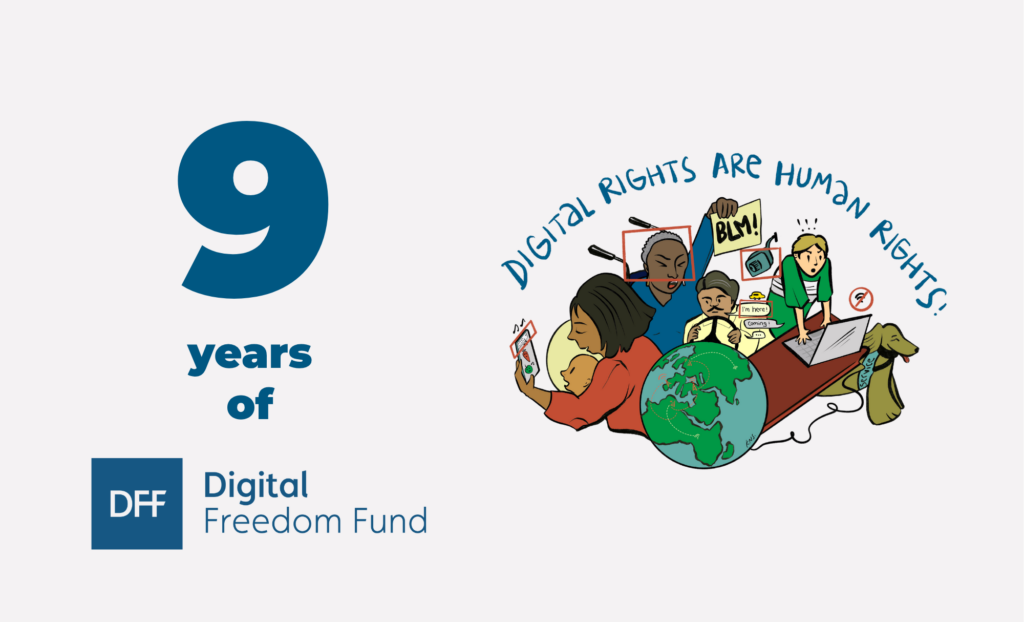
Today, we’re celebrating 9 years of DFF — nine years of working towards a world where everyone can fully enjoy their human rights in digital spaces.
Nine years ago, we often had to start by explaining what we meant by “digital rights”.
At the time,“digital rights” was a term that needed explaining and many still needed convincing that what happened online mattered just as much as what happened offline.
Fast forward nine years, and the conversation has changed dramatically.
Today, with the harms of data centres, big tech and AI regularly making the headlines, the relevance of digital rights seems obvious. Questions about privacy, freedom of expression, discrimination, democracy, workers’ rights and access to justice are inseparable from the digital spaces and technologies that shape our lives. The fact that we no longer have to explain why digital rights matter is itself a pretty remarkable measure of how far we have come.
Reshaping the "digital rights field" and shifting power
The basic premise for DFF’s foundation was that as more of our lives moved online, human rights protections needed to move with them, but the “digital rights field” was a nascient field and lacked sufficient access to the funding, legal expertise, coordination and long-term support needed to take effective legal action.
DFF was therefore created to help build the infrastructure for digital rights litigation in Europe: supporting lawyers and civil society organisations to bring strategic cases, connecting people across jurisdictions, and helping turn individual legal victories into broader systemic change. We began this work with no more than 30 self-identified digital rights organisations mostly hailing from central Europe and the UK.
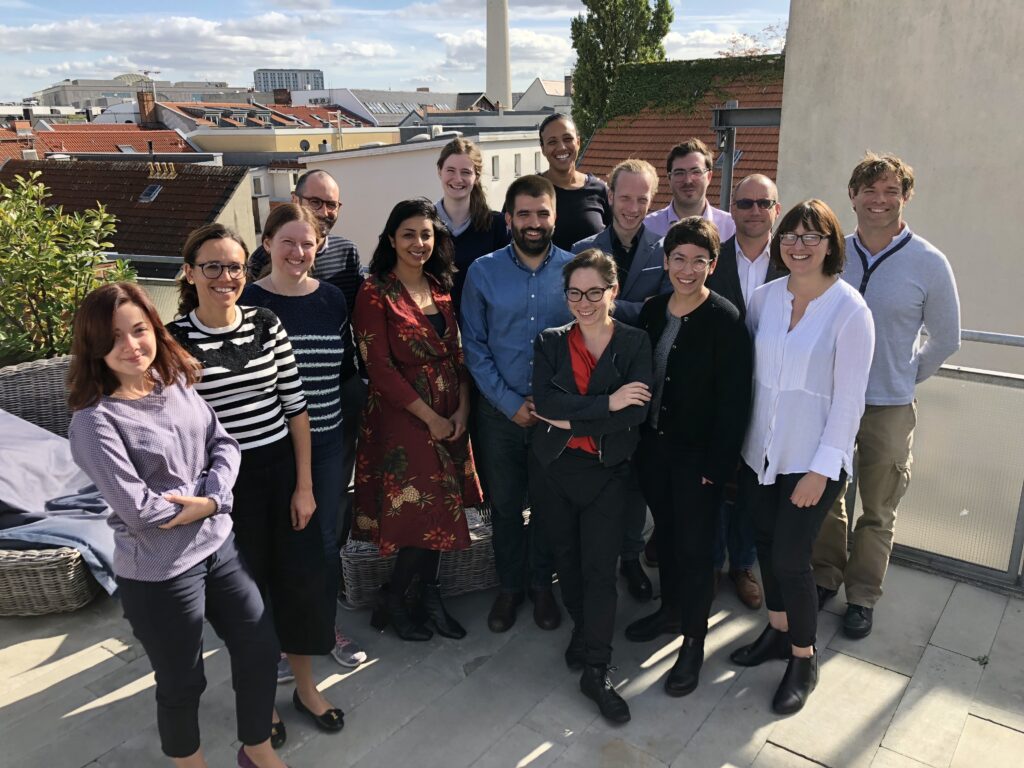
However, DFF’s founding Director Nani Jansen Reventlow’s vision for the “digital rights field” looked very different than the groups we gathered during those founding years. Nani realised that to truly defend everyone’s digital rights, we needed to bring those most affected by digital harms into the room. So the Decolonising the Digital Rights Field and Digital Rights 4All became priority programmes at DFF.
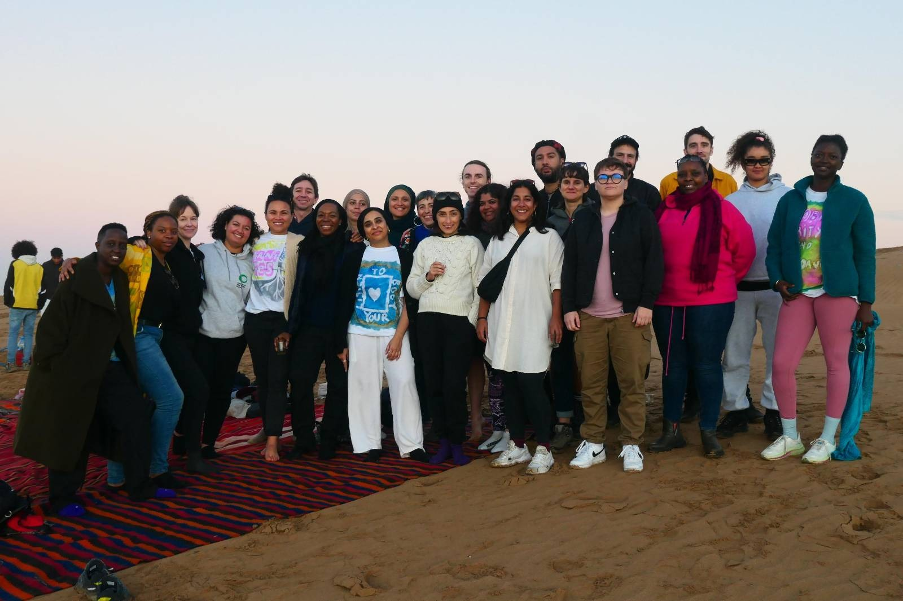
Thanks to these two programmes, we have seen the “digital rights field” transform into the Digital Rights Community where a vast array of human rights organisations and practitioners come together to work at the intersection of digital rights. DFF’s Community is now a place where we aim to centre and shift power to marginalised groups that are most heavily impacted by digital harms including the majority living beyond the borders of Europe.
Our proudest moments
Over the past nine years, we as a team are most proud of:
- Financially supporting strategic legal action challenging unlawful surveillance; discriminatory technologies; online harms; and threats to privacy, freedom of expression, and equality. DFF has done this through 165 grants worth nearly EUR 6 million to more than 100 different groups in 30 countries.
- Building a community that makes stronger legal action possible. What started as a small network of “digital rights” organisations has grown into a community of more than 400 organisations working at the intersection of digital rights. We bring people together to build skills, exchange knowledge, cross-pollinate each other’s work, and unlock potential for collaboration and collective action. The actions supported are becoming highly complex and organised, with cross-border coalitions and collaboration to take on Big Tech that we only dreamed of nine years ago.
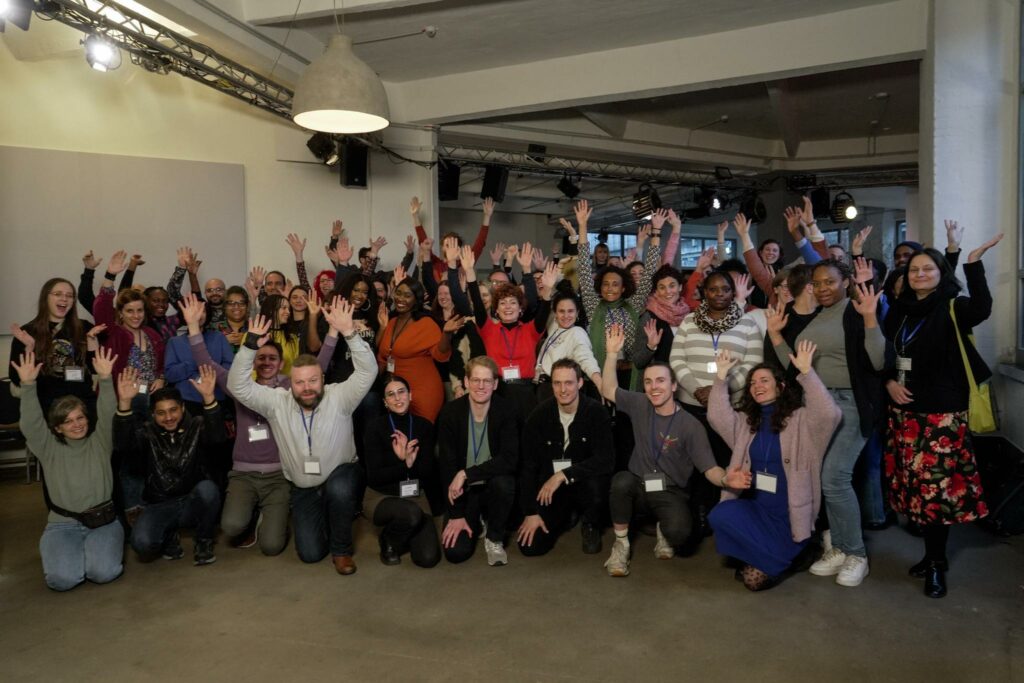
- Shifting power to those most affected by digital harm. The Decolonising the Digital Rights Field programme culminated in a decisive shift in DFF’s strategic focus to mainstream anti-oppressive practice in our work and centre marginalised groups most impacted by digital harms to achieve better legal outcomes. However, the Decolonising programme did not quietly conclude there. Besides living on as an integral part of DFF’s ethos and strategy, the needs identified during the programme were so large that they called for the foundation of a separate entity to support and resource digital justice organising in Europe. Therefore, in 2024, the former DFF Racial and Social Justice Lead, who led the Decolonising and Digital Rights 4 All programmes, Laurence Meyer, together with Salmana Ahmed, went on to found Weaving Liberation, an entity still hosted by DFF.
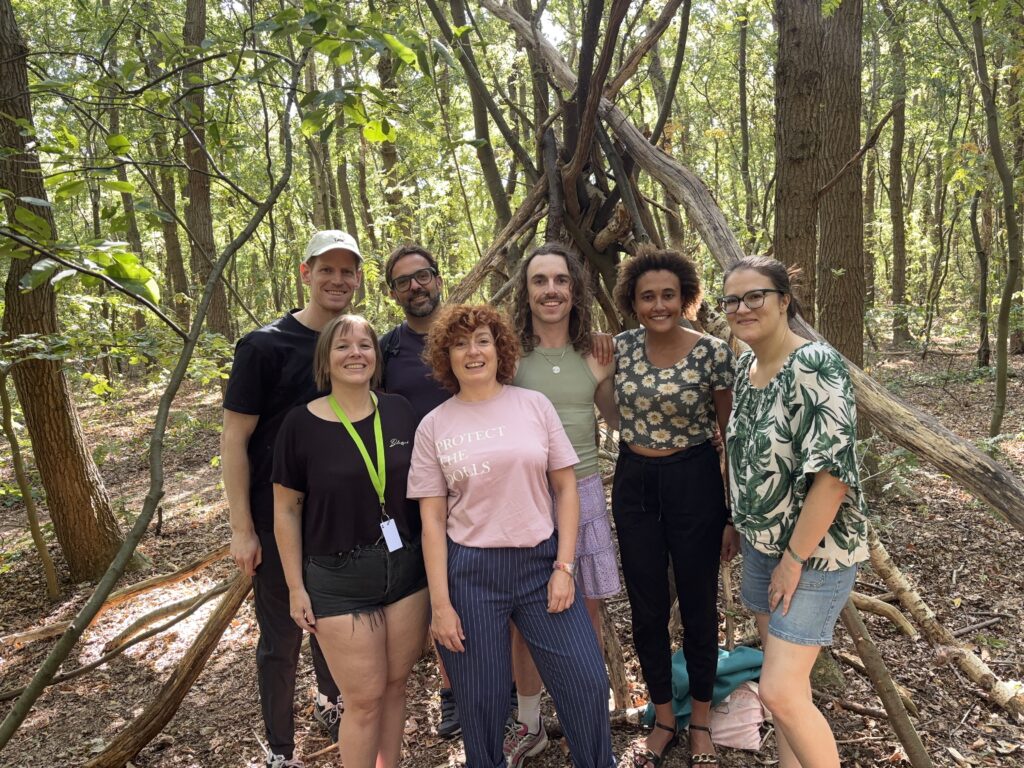
- Living our values at DFF. To credibly host the Decolonising the Digital Rights Field programme, we also had to reckon with our internal culture and what it means to create a safe workplace for everyone at DFF. This quickly precipitated into a call from staff for big changes in how we work internally. We adopted a distributed leadership model in 2024 with two Co-Directors, Darrah Hassell and Nikita Kekana. Over the past two years, we have defined together what distributed leadership and anti-oppressive culture mean to us. For us, this has translated into more focus on staff well-being and care, a transparent consent-based compensation reform and the move to a four-day workweek.
Looking ahead
Nine years on, we are proud of how far the movement for digital justice has come and of the role DFF has played in helping it get here. But the need for this work has never been greater. As digital technologies become ever more deeply embedded in our societies, protecting human rights in digital spaces is no longer a niche concern: it is fundamental to building just, democratic and equitable societies.
Our work over the past nine years has shown us that lasting change does not come from legal victories alone. It comes from resourcing the frontline, building community, shifting power and creating the conditions for collective action. It comes from ensuring that those most affected by digital harms have the power, resources and legal tools to shape the future of technology.
As we look towards our tenth year, we are excited to build on this foundation, particularly by bringing more focus to our work through our Community Hubs. If you want to see what this looks like in practice, our newly released 2025 Annual Report captures a year of this work: the cases we supported, the communities we strengthened, the power we helped shift, and the impact we achieved together.
Nine years in, we can see just how far we and the Community have come — but also how much further there is to go. The digital world is still being built, and too often it is being built around the interests of the powerful rather than the rights of people. From surveillance and discrimination to the growing power of Big Tech and the profound risks posed by AI, the challenges ahead are daunting. We are proud of the ground we have helped to gain, but we know that the road to digital justice is long. The work of building a digital world where everyone can live freely, safely and with dignity will take persistence, courage and collective action. The work ahead is immense, but so is our determination to keep pushing for a digital world that works for everyone.