Ensuring Safe Online Spaces for Children
Ensuring Safe Online Spaces for Children

By Ange Royall-Kahin, Thomas Vink, Nikita Kekana, 3rd September 2026
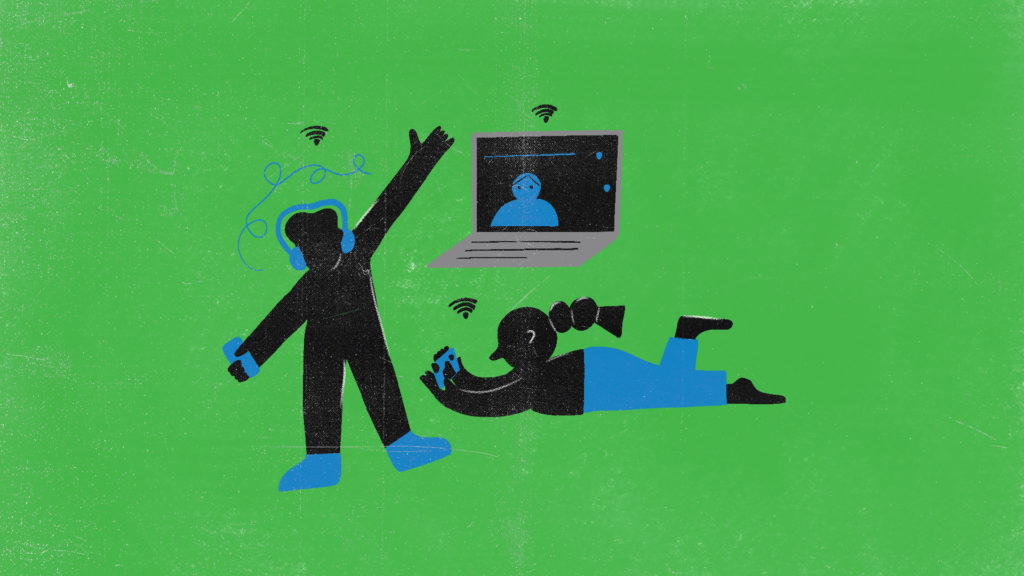
An online and technology-driven world increasingly comes with many benefits for children and young people – but also harms: manipulated attention, surveilled activities, sexual predators, and extreme content like the “manosphere.” So when it comes to children’s rights online, a common stated goal among most people is that we should ensure the wellbeing and safety of children. However, there are differing views about the best ways to achieve this. Below we summarise some of the main activities being carried out to achieve this goal, developing some of the key topics outlined in our Children’s Rights Online Hub Community Consultation Report.
Design of AI, platforms, and apps centred on children’s wellbeing
Many online harms to children and young people are created or exacerbated by tech companies using a business model that profits from extended interaction and time spent by users on apps or platforms. One way to improve children’s wellbeing online is to force or incentivise companies to change their business model, removing the practices that create harm. The courts and government enforcement mechanisms are playing a role here: the European Commission found TikTok’s “infinite scroll, autoplay, push notifications, and its highly personalised recommender system” in breach of the Digital Services Act (DSA). Furthermore, Brazil issued its first ruling implementing the ECA Digital, holding platforms liable for offering loot boxes to minors. In the US, a wave of lawsuits allege that AI companion chatbots were designed to manipulate children and foster emotional dependency.
Another approach advocated by some groups is to limit children’s access to harmful online spaces. In a growing number of countries, outright social media bans for children are considered. Since November 2024, at least nine countries have introduced age-based social media restrictions while another seven, including Australia, Brazil, and the UK, have already enacted them into law. In response, the European Commission is encouraging member states to adopt a harmonised, EU-wide age verification app. Responding to such bans, the UN Human Rights Office warned that “[s]imply limiting access to platforms that remain unsafe cannot stand as the endpoint in effectively protecting children. We need much wider action – by Governments and companies – to ensure that the platforms themselves are made safer by design, that data is protected, [and] that those responsible for harm can held to account.” And a coalition of 31 youth organisations goes further, calling policies that require access limits, age verification, and surveillance exclusionary.
Ensuring children’s privacy and data is protected
Data collection and profiling is also core to Big Tech’s business model, working alongside addictive design to drive the ad-tech revenue engine within platforms and apps; however, the use of minors’ personal data can directly violate or facilitate the violation of children’s privacy, other human rights, and local child safety laws.
Brazil’s ECA Digital law, which went into effect in March 2026, compels technology companies to “design products with young users’ best interests in mind and provide them with the highest levels of privacy and safety by default.” Specifically, the law bans online services from profiling children to target them with behavioral advertising. While African Union countries are adopting data protection laws, most don’t provide child-specific provisions comparable to Brazil and the EU.
There is evidence that schools and governments also collect data and profile children, applying labels that can follow children into adulthood and have life-long impacts. As a result of complaints filed by defenddigitalme, an audit of the Department of Education was conducted and “found that the Department had broken the law in the processing of the database, containing details of every state school pupil in England since 2002.” The data of young people has also been used to conduct predictive policing: Public Interest Litigation Project (PILP) found Amsterdam’s “Top400” programme – which profiles minors and young adults to predict the 400 most likely to commit serious crimes – is “discriminatory” and “built on surveillance, policing and stigmatisation of children and their families.”
Preventing child abuse enabled by technology
Unfortunately, online technologies have played a large role in facilitating and accelerating child abuse – including through the use of deepfakes. The European Commission has used the DSA to counter this trend: in January 2026, the Commission expanded a 2023 investigation into X, to include an examination of whether X’s Grok tool generates “content that may amount to child sexual abuse material (CSAM).” Additionally, the EU’s AI Act “Digital Omnibus” contains a specific nudifier ban. These actions come while the EU continues to debate the “Child Sexual Abuse Regulation,” which specifies required scanning of messages on platforms to fight CSAM and grooming. However, many groups, including the UN Human Rights Office, have warned that broad monitoring obligations that break end-to-end encryption “would pose a serious threat to all users’ rights, including child users.”
The African Union’s Child Online Safety and Empowerment Policy of 2024 – the first regional policy of its kind – sets clear principles and intentions, though they aren’t yet binding. The Policy acknowledges that while many countries have addressed sexual exploitation of minors and banned pornography, these laws “do not specifically address the criminal aspects of various forms of online child sexual exploitation and abuse identifying. Furthermore, the lack of a harmonised definitions, approach and legislative measures among Member States, pose a considerable challenge in making sure offences are identified.”
Educational work for children’s wellbeing
There are also actions from governments and international organisations to improve the wellbeing of children by guaranteeing they have access to the Internet and online education. The EU Digital Education Action Plan, for example, recognises that digital education plays a role in making education “more flexible, inclusive and accessible” and preparing learners with “the digital skills they need to thrive in today’s connected world.” Based on a similar understanding, Brazil launched their National Strategy for Connected Schools, which aims to connect all the country’s schools to the Internet by the end of 2026. A focus of this strategy is rural access and the physical infrastructure it requires. This was highlighted by UNICEF and ITU, which indicate “More than 1 billion children struggle to learn without quality (fixed) broadband access to the Internet at home, and only around half of the world’s schools are online.” As a result, the organisations launch Giga, an initiative to connect every school in the world to the Internet.
Where we go from here
In the first half of 2026, DFF consulted with a range of groups and individuals working at the intersection of children’s rights and digital rights. Participants identified an urgent need for a collaborative space to form stronger partnerships and share knowledge to develop legal strategies that protect children and youth online. It is critical that these legal strategies focus on the root causes behind online harm to children – such as Big Tech business models and a lack of a child-wellbeing-and-rights-centred approach to technology design – rather than addressing solely the manifestations of harm.
We are building the Children’s Rights Online Hub to support and facilitate this space. With plans to launch in early 2027, the cohort will consist of around 30 organisations across Europe, Africa and Latin America working on online children’s rights and safety. If you are interested in joining or supporting our Children’s Rights Online Hub, please contact Thomas and Nikita – and sign up for DFF’s newsletter for updates on the Hub’s launch.