6 Insights from the AI Hub’s First 6 Months

By Nikita Kekana, 9th December 2025

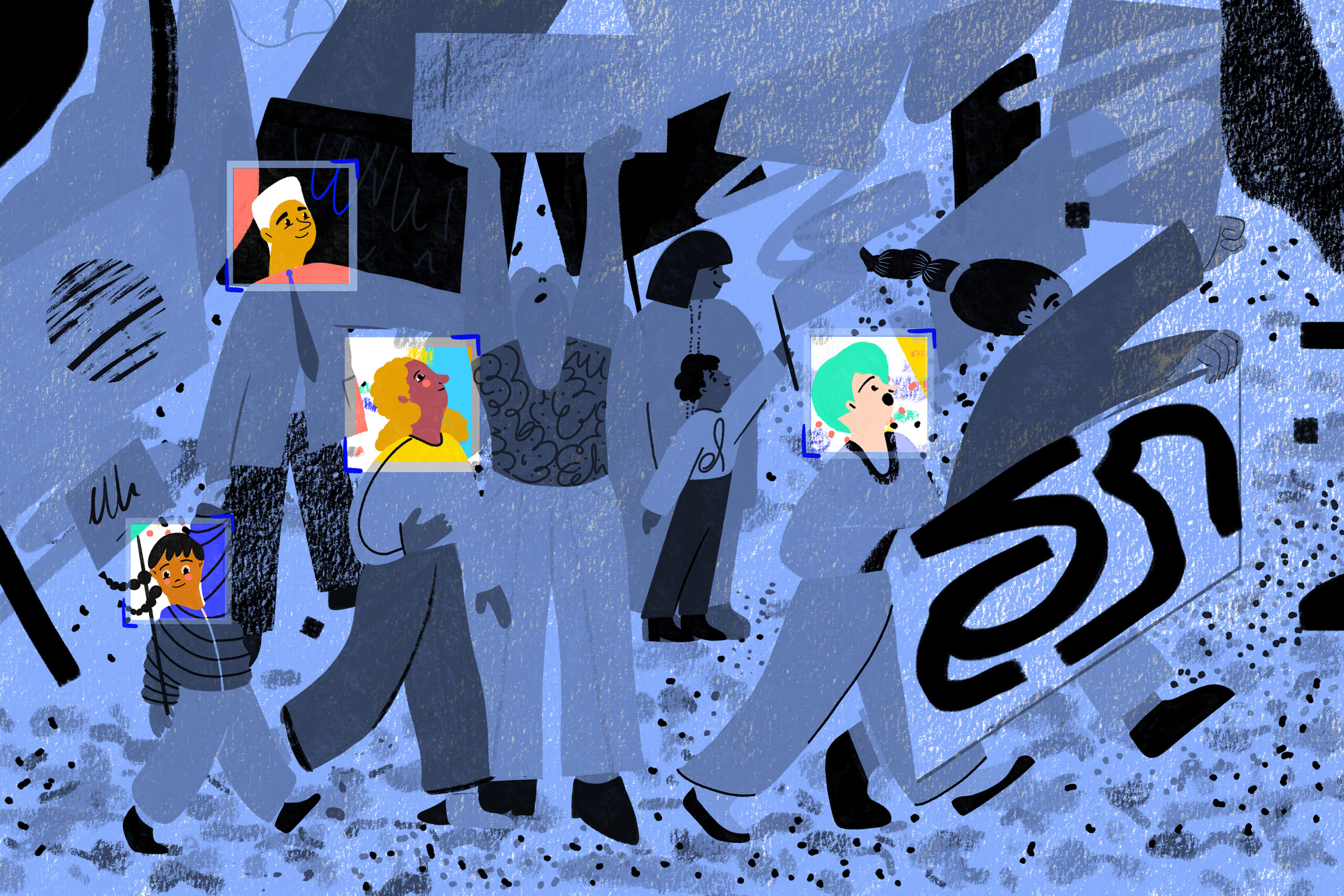
Illustration by Kruthika NS (TheWorkplaceDoodler)

As we recognise the Human Rights Day, it’s fitting to reflect on DFF’s contribution to human rights protection in the first six months of our first-of-its-kind AI and Digital Infrastructure Strategic Litigation (AI Hub).

Hub Recap

The AI Hub is the first of a series of Strategic Litigation Hubs which we are launching within our Community Programme. The purpose of the AI Hub is to foster collaboration on strategic litigation to hold Big Tech, governments, and other relevant actors accountable for the harms caused by AI and their use of digital infrastructure.

We have brought together approximately 30 participants from 30 organisations involved in various forms of strategic litigation related to AI and digital infrastructure. We have met in person twice this year: at our launch workshop on Digital Environmental Justice and AI, and at the Digital Infrastructure Strategic Litigation Retreat (AI Retreat). In addition to in-person events, we have been facilitating monthly calls among our participants.

Here is what we have learned over the past six months since introducing the AI Hub. 

1.   Accountability Needs To Keep Abreast Of AI Development

One lesson that I have definitely learned from colleagues in this space is just how quickly AI technology is developing and how difficult it often is to grasp the many human rights violations and negative environmental effects that have been emerging. For instance, the harmful ways in which AI is being deployed and contributing to large-scale discrimination and privacy violations, particularly against those already marginalised within society.  

We must continue to band together within civil society to educate one another about the latest technological developments and alternatives, so that our future can be reimagined to centre humanity and our planet’s ecosystems rather than Big Tech profits and autocratic control.

2. Don’t Forget The Infrastructure

Another important lesson is that we really shouldn’t forget the digital infrastructure. Traditionally, the digital rights space has been very focused on more downstream issues, such as the use of the technology in surveillance, but our colleagues looking at the development of the infrastructure itself, e.g. smartphones and renewable technology, have shown us the importance of reflecting on where our infrastructure comes from and how it was developed. For instance, being aware of the mass human rights violations occurring in the Congo as a result of cobalt mining.

3.   Zoom In On The Local Context

Another lesson that has stuck out in this AI Hub is the importance of the local context. Again and again, in different forms, participants have revealed how important context is, even when addressing global issues such as the carbon footprint of data centres.

For instance, in some places, the most pressing issue with data centres has been large-scale land grabs and the forced displacement of local communities, whereas in others it has been the extensive electricity and water use of these facilities that competes with residents’ ordinary use of electricity and water. We must prioritise taking legal cases that address concerns affecting local communities, rather than whatever we personally consider most important for AI accountability and the climate crisis.

4. Wide Range Of Participants

We are delighted that the AI Hub has a diverse group of participants, including technologists, litigators, and community organisers with a diverse level of expertise, who are tackling AI and digital infrastructure accountability from different angles.

These different expertise and perspectives have added immense value to our AI Hub. We noticed that different groups of participants approach accountability in slightly different ways and often offer others vital lessons. For instance, our technologists and researchers focus more on technical aspects of the tech, while our grassroots organisation participants have a critical expertise in community organising.

 This diversity in perspectives has also been furthered by having participants from a wide range of places across Europe, Latin America, and Africa. Given DFF’s traditional focus on Europe, it has been valuable to have the Global Majority perspective, especially on infrastructure development and anti-discrimination law.

5. Importance of Face-to-Face Meetings

Through our Hubs, we can provide civil society with a space to regularly meet and build meaningful connections over time on specific digital rights thematic areas, rather than just giving them an initial burst to meet at a one-off in-person event.

Linked to this, we hosted two in-person meetings in the Hub this year. At the end of our AI Retreat, I was once again reminded of the true magic that can happen over this three-day event: the deeper connections and the incredible dedication that each participant had towards helping others develop their strategic litigation cases. What I found even more inspiring was that, towards the end of the strategic litigation retreat, we held a session where participants could discuss the main obstacles they were facing and seek practical input from others. Everyone was so thoughtful and willing to continue assisting others beyond the Retreat. Let’s continue to help each other!

6.   Relax and Take Your Time

One of the main reasons we introduced the Hub is that we received feedback from the digital rights community that more resources are needed for early-stage strategic litigation. The sheer number of applicants we received to join our AI Hub reaffirmed this need.

More significantly, initially, we envisaged spending only a few months assisting our participants with the preparation phase of their legal cases, i.e., before they filed their cases with a court or tribunal. However, despite already covering topics such as broader aspirations for court cases, jurisdiction, admissibility and legal standing, with input from the participants, we have realised that we need to dedicate more time to the preparation phase. In 2026, we will begin our AI Hub discussions on evidence gathering.

Looking to the Future

Once we have completed the preparation phase of our AI Hub, participants shall focus on key steps after a court case has been filed, including developing legal arguments, preparing for regional court representation, and maintaining continued community involvement in the case.

We are also going to be getting feedback from our Hub participants directly in 2026 so that we can live up to our value of being community-inspired and make the AI Hub and future Hubs as useful and valuable to the Digital Rights Community as possible.

We shall be launching our next Hub on digital democracy in February 2026.

We also hope to fund many of the cases that are emerging from the AI Hub. However, our resources are limited, so we cannot do this alone. We are also looking forward to foundations and other regrantors getting involved in the AI Hub activities and funding some of the incredible cases that are emerging from the AI Hub.

If you’re interested, please contact me at nikita@digitalfreedomfund.org, and we can schedule a call to discuss your future involvement.